Squirrel control
Squirrel control
Recognise loft activity and arrange lawful, humane professional control.
Clear, proportionate guidance—without alarmist claims.
How to recognise the signs
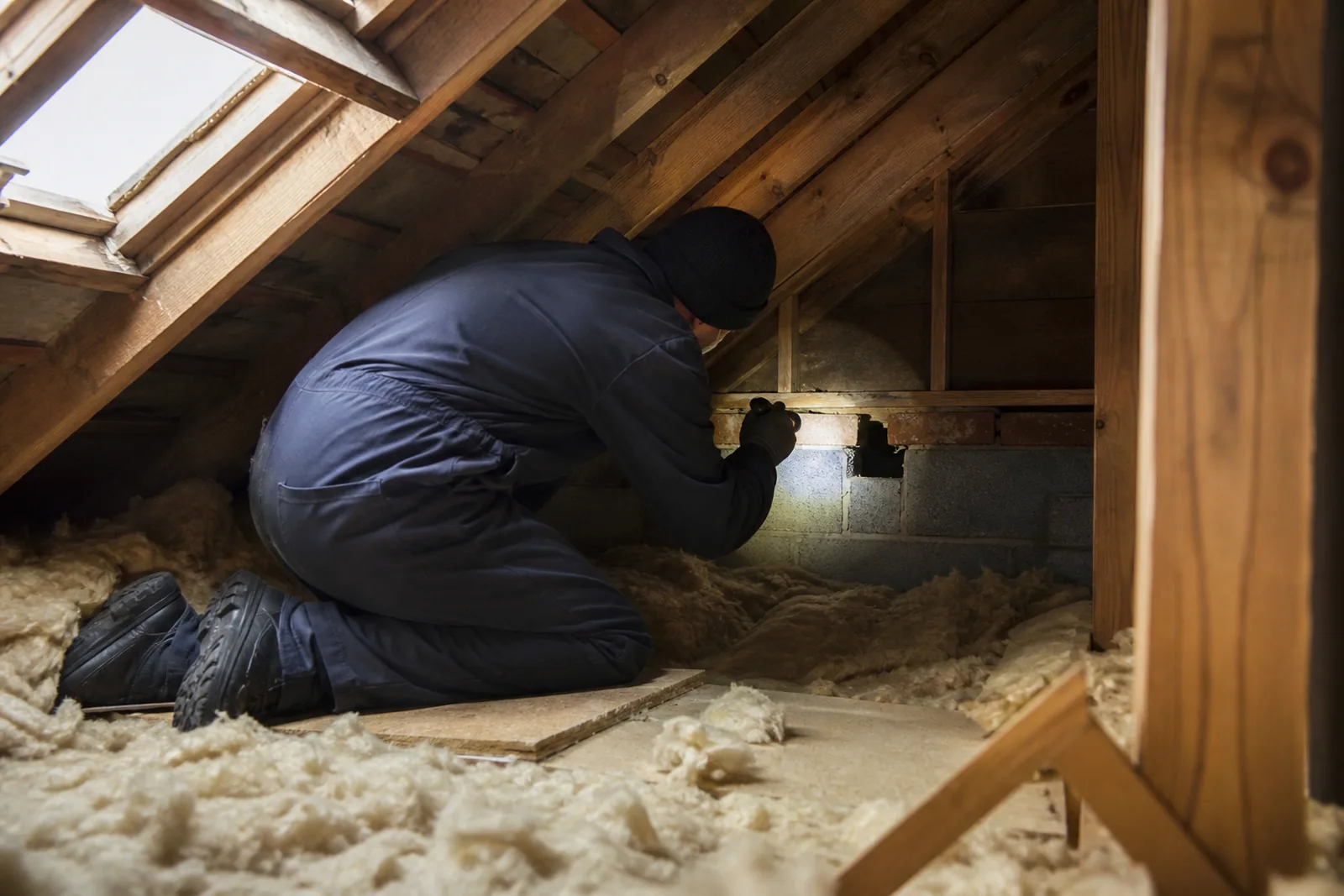
Loft activity may include heavy daytime movement, gnawing, disturbed insulation, nesting material and entry damage near roof edges. Confirming the animal matters because rats and birds can sound similar.
What to do now
Keep away from damaged wiring and contaminated nesting areas, observe entry points from outside and record the timing of sounds. Arrange prompt inspection if wiring is affected.
What not to do
Do not seal an occupied entry, handle wildlife, use poison, disturb dependent young or work on a roof without proper safety equipment.
Prevention and proofing
Maintain roof edges and trees responsibly, repair access points only after lawful removal or confirmed vacancy, and use durable wildlife-appropriate proofing.
What professional help may involve
A competent professional can identify the species, check for young, follow wildlife law and combine lawful control with entry-point repair.
Before contacting a provider
- Record where and when activity occurs.
- Take clear photographs without disturbing contamination or nests.
- Note previous treatment and access restrictions.
- Ask what inspection, treatment, follow-up and proofing are included.
Frequently asked questions
Why are noises often heard during the day?
Grey squirrels are generally active by day, while rats and mice are more often active after dark. Timing is only one clue.
Can I simply block the hole?
Not while the loft may be occupied. Trapping an animal inside can create welfare, damage and odour problems.
No tracked professional affiliate is configured yet. PestDeck will show nationwide options here after an approved programme is connected.Professional pest-control help